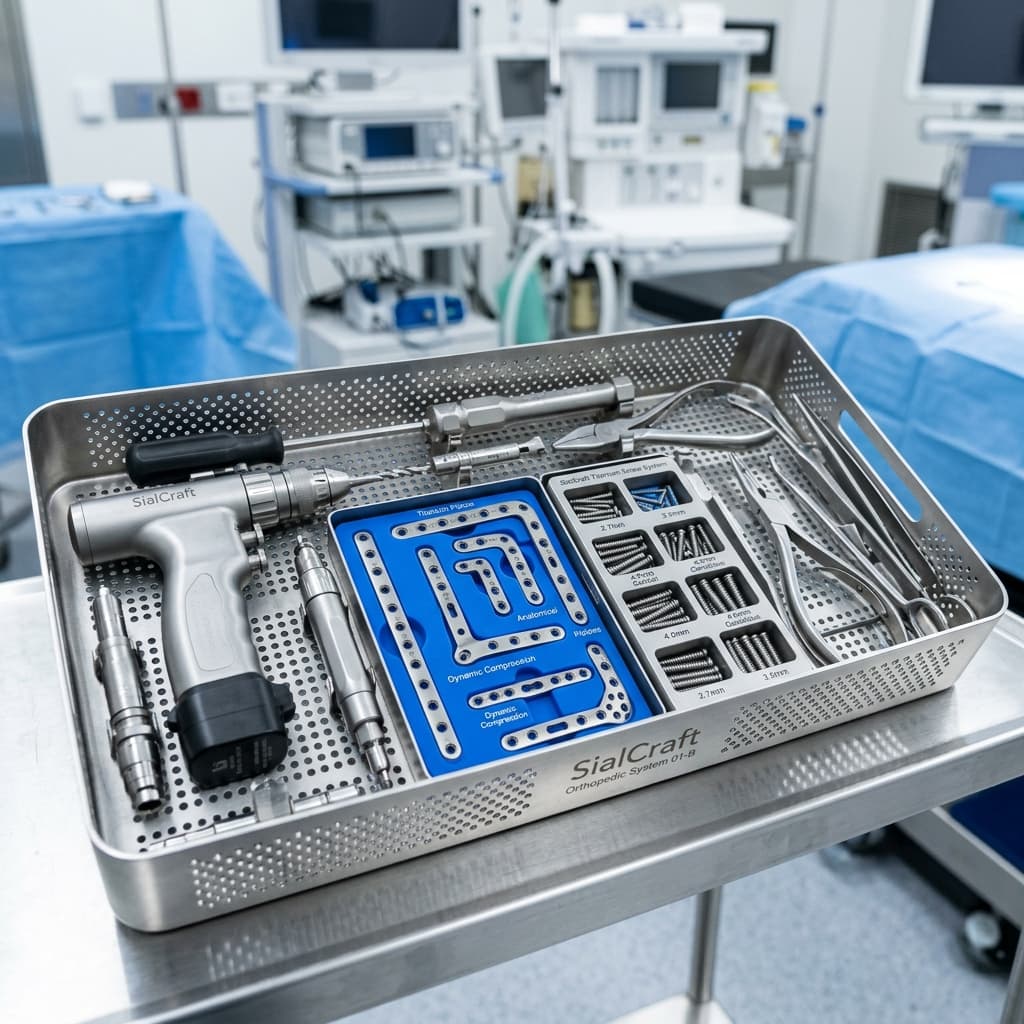
There is a persistent misconception among some Western procurement managers that surgical instruments from Sialkot are manufactured exclusively with hand files and coal fires. While generational bench skills remain vital, modern tier-1 Sialkot manufacturing has undergone a profound technological and regulatory revolution over the past decade.
Driven by the European Union Medical Device Regulation (EU MDR 2017/745), US FDA Unique Device Identification (UDI) mandates, and demands for sterile single-use procedure packs, top-tier Sialkot facilities now mirror the technical rigor of German and Swiss med-tech facilities. Here is an inside look at how modern precision engineering operates in Sialkot today.
The 5 Pillars of Advanced Sialkot Manufacturing
1. Computerized 5-Axis CNC & Wire-EDM Machining
While basic instrument outlines are still hot-drop-forged to align steel grain boundaries, finishing is increasingly executed via computerized multi-axis machinery. Wire Electrical Discharge Machining (EDM) slices hardened martensitic steel blocks with micron-level electrical sparks, producing box lock hinge slots with tolerances tighter than ±0.015mm.
This eliminates the lateral play that causes scissors to tear tissue or needle holders to slip during delicate cardiovascular and microsurgical procedures.
2. Vacuum Heat Treatment with Cryogenic Quenching
Traditional open-flame hardening has been replaced by computer-controlled vacuum heat treatment furnaces. By heating instruments in an oxygen-free chamber, the steel surface experiences zero decarburization or oxidation scaling.
Following high-temperature austenitizing, instruments undergo sub-zero cryogenic quenching (-80°C to -120°C). This transforms residual retained austenite into pure martensite, raising Rockwell hardness to a uniform 52–56 HRc for cutting edges and 70+ HRc for Tungsten Carbide inserts without inducing internal stress fractures.
3. Automated Chemical Passivation (ASTM A967 / ISO 7153-1)
Corrosion resistance is not merely an inherent property of stainless steel—it is engineered on the surface. Modern Sialkot production utilizes automated multi-stage passivation lines:
- Alkaline Degreasing: Ultrasonic cleaning tanks remove all residual polishing compounds and oils.
- Heated Acid Immersion: Heated nitric or citric acid baths chemically dissolve free iron molecules from the exterior 15–30 nanometers of the metal surface.
- Chromium Oxide Layer Formation: Exposed chromium atoms react with atmospheric oxygen to form an impenetrable Cr2O3 passive film.
- Boil & Copper Sulfate Testing: Random batch samples are boiled in distilled water for 30 minutes to verify zero staining before quality release.
4. ISO Class 7 & Class 8 Cleanrooms
With global demand surging for sterile single-use kits—such as disposable safety scalpels and veterinary packs—tier-1 Sialkot plants operate ISO 14644-1 certified cleanrooms. Equipped with positive-pressure HEPA filtration, laminar flow hoods, and bioburden testing laboratories, instruments are packaged in medical-grade Tyvek/foil blister pouches before undergoing validated Gamma radiation (25 kGy) or Ethylene Oxide (EtO) sterilization.
5. Fiber Laser Etching & GS1 UDI Barcoding
Traceability is the bedrock of contemporary healthcare logistics. Sialcraft employs high-definition fiber laser marking systems to etch GS1-compliant 2D DataMatrix Unique Device Identifiers (UDI) directly into the steel shank. Scannable by standard hospital OR inventory systems, each code encodes the instrument model, batch number, manufacturing date, and sterile status.
The EU MDR 2017/745 Compliance Shift
The enforcement of the EU Medical Device Regulation (EU MDR) permanently divided the Sialkot landscape. Unregulated trading houses and low-tier workshops incapable of producing clinical data or Technical Files have been largely locked out of European supply chains. In contrast, compliant manufacturers like Sialcraft operate with:
- ISO 13485:2016 Certification: Audited annual Quality Management Systems covering the complete design, manufacturing, and export lifecycle.
- Complete Technical Documentation: Risk management files per ISO 14971, usability engineering per IEC 62366, and biocompatibility certification per ISO 10993.
- Post-Market Surveillance (PMS): Documented vigilance reporting and customer feedback loops to identify and resolve field anomalies rapidly.
Auditing a Sialkot Manufacturer: The Importer's Due Diligence Checklist
When evaluating potential surgical instrument partners in Sialkot, verify the following evidence before placing purchase orders:
| Audit Point | Required Verification Evidence | Red Flag / Warning Sign |
|---|---|---|
| Steel Traceability | Mill Test Certificates (MTC) matching ASTM F899 specs. | Generic claims of "German steel" without heat/batch numbers. |
| Heat Treatment | Digital furnace data logs & calibrated Rockwell testers. | Manual charcoal forge tempering with uneven jaw hardness. |
| Passivation | Documented ASTM A967 acid bath concentration logs. | Relying solely on mechanical buffer polishing for shine. |
| UDI Marking | Verified laser-etched 2D DataMatrix readability test. | Ink-stamped logos that wash off during autoclave cycles. |
| Regulatory Files | ISO 13485 certificate verified directly with issuing registrar. | Expired CE certificates under the repealed MDD 93/42/EEC. |
The Sialcraft Quality Guarantee
Sialcraft is built upon verified modern engineering. Operating with 100+ vetted surgical manufacturing partners in Sialkot, we guarantee 100% material traceability, sub-200ms supply chain transparency, and full regulatory compliance. Review our OEM branding solutions or schedule a procurement audit consultation today.