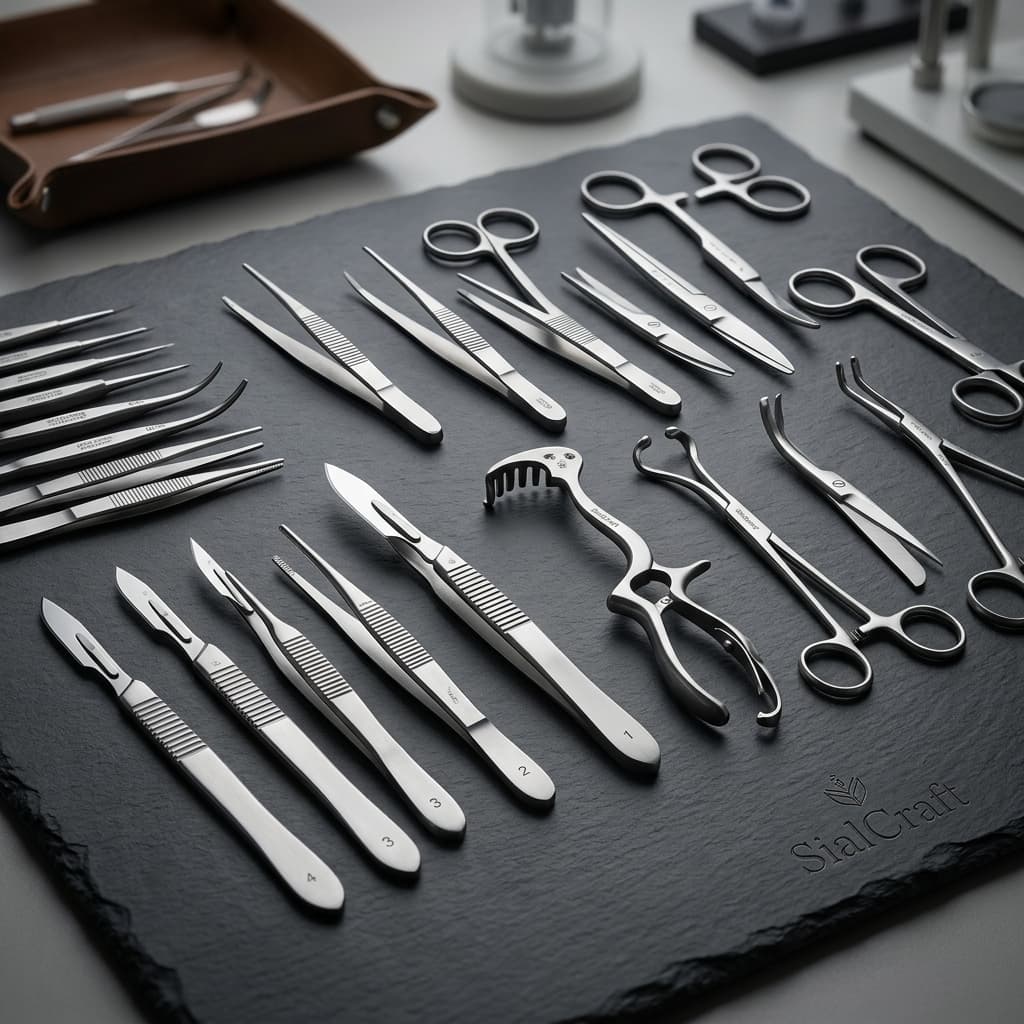
Today, an estimated 20% of all hand-held surgical, dental, and veterinary instruments used in operating theaters worldwide originate from a single city in northeast Pakistan: Sialkot. With annual exports exceeding $450 million USD and an industrial ecosystem employing over 150,000 skilled craftsmen and engineers, Sialkot is internationally recognized as the world capital of surgical instrument manufacturing.
Yet this multi-hundred-million-dollar global medical export engine did not begin in a computerized corporate technology park. It began over 130 years ago in dusty colonial workshops, where generational weapon-makers and blacksmiths turned their metallurgical mastery toward healing the human body. This is the definitive origin and evolution of Sialkot's surgical industry.
The 1890s Genesis: The Mission Hospital Turning Point
In the late 19th century under the British Raj, the Church of Scotland established the Mission Hospital in Sialkot. British military surgeons stationed in Punjab routinely faced severe delays when their imported English scalpel blades, amputation saws, and forceps broke or dulled in the field. Shipping replacement instruments from Sheffield or London took upwards of six months via steamship.
Surgeons turned to local metalworking artisans known as Lohars (blacksmiths) and Sikligars (sword polishers), who had forged ceremonial swords, daggers, and cavalry armor for the Mughal courts and regional rulers for centuries. When tasked with repairing complex spring-ratchet forceps and broken scalpels, the artisans not only repaired them flawlessly—they forged exact replicas from scratch that matched or exceeded the cutting fidelity of British imports.
Recognizing this latent brilliance, the medical superintendents began commissioning entire surgical sets locally, laying the cornerstone of commercial medical manufacturing in the Punjab.
World War II (1939–1945): The Industrial Crucible
While the early 1900s saw Sialkot supply civil hospitals across British India, World War II was the crucible that transformed the industry from an artisanal guild into an international manufacturing powerhouse.
By 1941, German Blitzkrieg bombing had severely crippled Britain's domestic surgical manufacturing centers in Sheffield and Birmingham. Simultaneously, Allied casualties surged across North Africa, Italy, Burma, and the Pacific. The British Ministry of Supply established an official procurement office in Sialkot, providing local craftsmen with standardized blueprints, British Standard Specifications (BSS), and metallurgical testing protocols.
During the war, Sialkot supplied over 80% of all field surgical instruments for the Allied armies in the Mediterranean and Far East theaters. By the end of the conflict in 1945, Sialkot was equipped with modern drop-forging presses, standardized hardening techniques, and a generation of master toolmakers conversant with international medical standards.
Post-Independence & The Rise of the Industrial Cluster
Following the partition of India in 1947, Sialkot became part of Pakistan. Rather than scattering, the surgical industry coalesced into one of the most remarkable industrial clusters documented in modern economic geography. Today, the Sialkot cluster comprises:
| Key Metric | Value | Strategic Significance |
|---|---|---|
| Registered Manufacturing Units | 1,900 – 2,500+ | High specialization across forging, CNC, grinding, passivation, and packaging. |
| Direct Workforce | 100,000 – 150,000 | Generational artisans paired with university-trained metallurgical engineers. |
| Annual Export Value | $420M – $450M+ USD | Pakistan's premier high-value-added engineering export sector. |
| Export Share | 95% – 98% | Almost entirely export-oriented, servicing international medical brands. |
| Global Volume Share | ~20% (Handheld tools) | Dominates global volume for Class I and Class IIb handheld surgical implements. |
The Clustering Advantage: Why Sialkot Remains Unbeatable
Why has no other region—in Asia, Europe, or the Americas—been able to replicate Sialkot's dominance in handheld surgical instruments? Economists point to the proximity advantage:
- Hyper-Localized Supply Chain: Within a 15-kilometer radius along the Daska Road and Small Industrial Estates, an instrument manufacturer has direct access to certified raw steel stockists (importing German and Japanese ASTM F899 billets), precision die-sinkers, drop-hammer forging shops, automated vacuum heat-treatment plants, chemical passivation baths, and cleanroom pouching facilities.
- Generational Tactile Memory: Grinding a fine 0.2mm Castroviejo needle holder tip or setting the tension on a Mayo scissor hinge requires subtle tactile feedback that cannot be fully replicated by software alone. Sialkot families have passed down these hand-finishing nuances through four generations.
- Low Overhead & Agile Batching: Unlike heavily automated European factories that require runs of 1,000+ units to justify setup, Sialkot's nimble cluster allows companies like Sialcraft to offer minimum order quantities (MOQ) of just 12 units.
The Sialcraft Legacy: Bridging Heritage and Digital Medicine
Today, Sialcraft operates from the heart of this storied manufacturing district. Working with over 100 specialized manufacturing partners across Sialkot, we combine this century-old metalworking heritage with computerized 5-axis CNC machining, automated ASTM A967 passivation, and strict ISO 13485:2016 quality management.
Explore our wholesale instrument catalog, review our certified medical steel metallurgy, or read our companion guide on Modern Sialkot Manufacturing & EU MDR Compliance.